Update: Thanks to a kind reader, we were made aware that the appendices to the Advocacy-Inquiry Rubric were not available online alongside the paper. These appendices are an essential practical resource for using the tool.
Comprehensive Air Rating Tool with 7 Point Scale: Appendix B | Comprehensive AIR
Comprehensive Air Rating Tool with Emoji-Based Scale: Appendix C | Emoji AIR
The Center for Medical Simulation introduces the Advocacy–Inquiry Rubric (AIR), a new evidence-based framework designed to make feedback and debriefing conversations in the OR, at the bedside, and in clinical teaching clearer, safer, and more effective.
Many clinicians avoid feedback conversations altogether—not because they don’t value them, but because they worry about damaging trust, escalating tension, or saying the wrong thing. Even skilled educators can feel unsure how to start, how to frame their concerns, or how to keep a conversation collaborative rather than corrective.
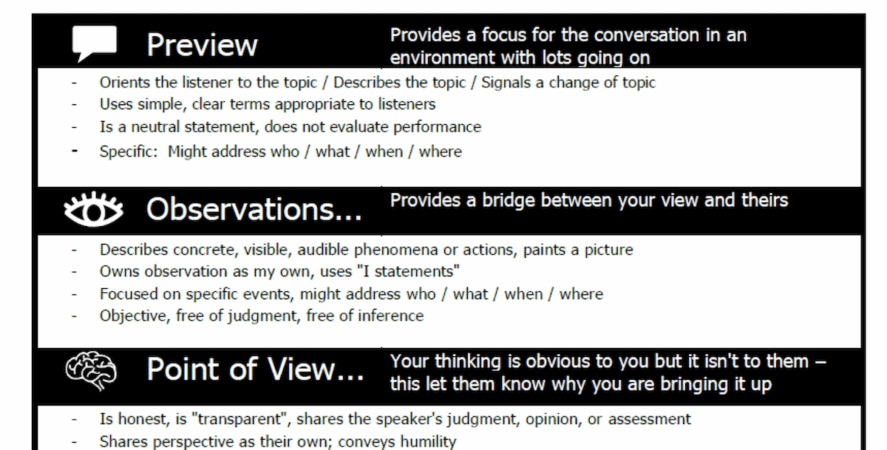
The AIR offers a solution. Through a rigorous international Delphi process, experts identified the essential behaviors behind high-quality Advocacy–Inquiry conversations and organized them into five practical elements: Preview, Observation, Point of View, Inquiry, and Listen. Each element includes specific behavioral descriptors that clarify what “good” looks like and provide a structured path for growth.
With versions tailored for teaching, peer feedback, and competency assessment, the AIR gives clinicians and trainees a common language and a reliable roadmap for feedback conversations that strengthen relationships, deepen learning, and improve patient-care performance.
The AIR Rubric and study are peer-reviewed and were recently published in Advances in Simulation: https://link.springer.com/article/10.1186/s41077-025-00381-z