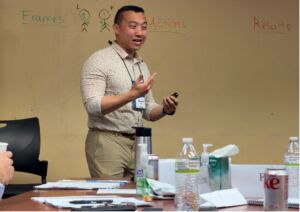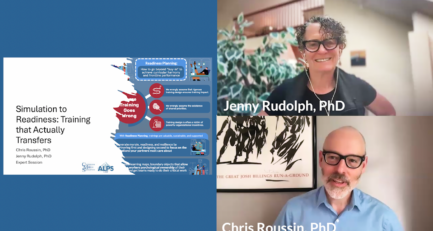
Dr. Benjamin Zhaobin Chin, a Medical Officer and anesthesiologist in the Singapore Armed Forces (SAF), arrived at the Center for Medical Simulation (CMS) in Boston with a mission that was equal parts personal and patriotic. He sought to address a fundamental question: how could he ensure that the medical providers of the SAF could maintain readiness to save lives in wartime, when Singapore has enjoyed sixty years of continuous peace? That question became the north star of his 12-month in-person fellowship at CMS, a program designed to help healthcare professionals develop, implement, and assess simulation-based education tailored to the real needs of their institutions and colleagues. What unfolded when Ben got to Boston was, as he described it, nothing short of an unexpected adventure.
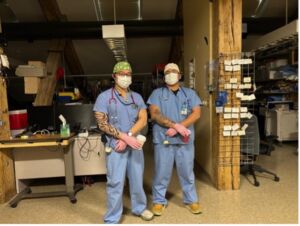
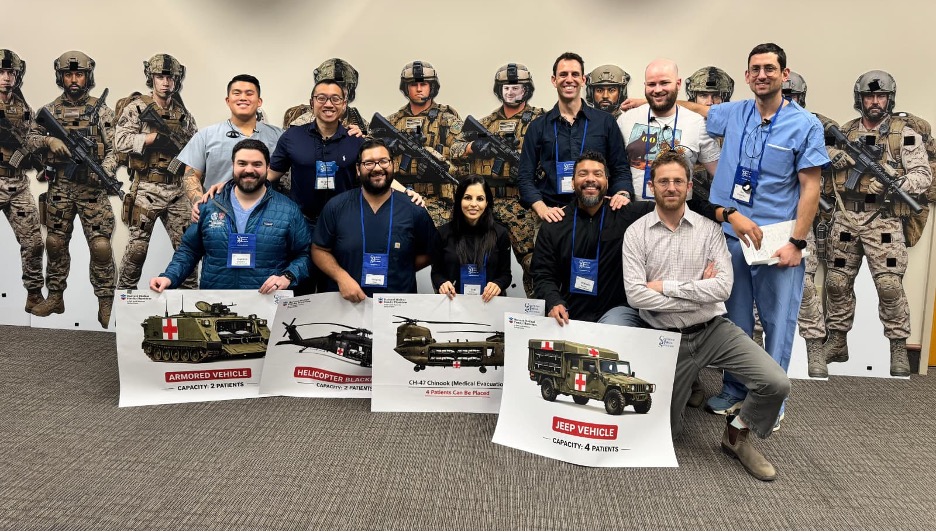
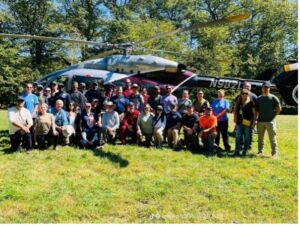
The scholarly project at the heart of Dr. Chin’s fellowship addressed a challenge that sits at the intersection of military medicine and simulation education: preparing providers to apply international trauma protocols under field conditions, plan and execute prolonged evacuation operations, and lead tactical triage under uncertainty. Drawing on the CMS fellowship’s emphasis on designing rigorous simulation-based programs, Dr. Chin assembled a remarkable coalition of expertise. He partnered with CMS faculty and educators, anesthesiologists from Beth Israel Deaconess Medical Center (BIDMC) who brought both simulation knowledge and real-world combat experience, and the BIDMC Disaster Medicine Fellowship — a group whose shared readiness goals made them the ideal learning cohort. Together with Isaac Brzezinski Sinai, CMS Medical Director and BIDMC Faculty Anesthesiologist, they created the Excellence in Action: Field Trauma Treatment course. This structured four-day course that scaffolded learning across three zones: Zone 1 familiarized participants with equipment and demonstrated skills in realistic contexts; Zone 2 leveraged tools like visually enhanced mental simulation (VEMS), part-task trainers, and board games to build decision-making and resource management; and Zone 3 brought it all together in high-fidelity, high-stress field simulations — including a chaotic helicopter evacuation scenario that pushed participants to their limits and, by all accounts, succeeded brilliantly.
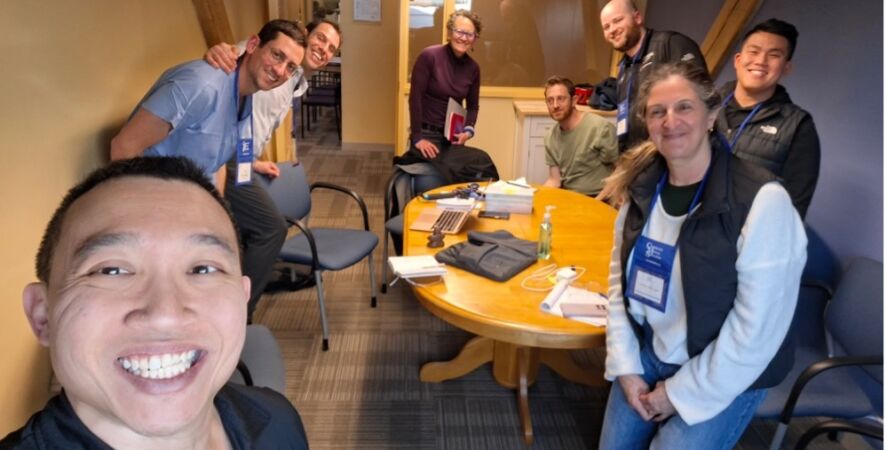
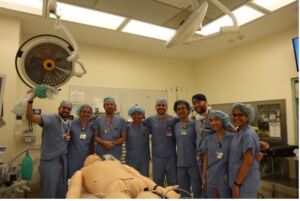
The CMS in-person fellowship offered far more than a single capstone project. True to the program’s promise of day-to-day immersion alongside faculty and staff, Dr. Chin threw himself into every dimension of CMS’s work. He participated in, debriefed, and even co-created Anesthesia Crisis Resource Management (ACRM) courses alongside CMS faculty. He worked hands-on with simulation technologists, troubleshooting equipment and building scenarios on the fly. He joined labor and delivery simulation courses — a long way from his medical specialty — and contributed to our Healthcare Simulation Essentials program, finding himself on the faculty side of a course he had once attended as a participant. He worked alongside anesthesiologists and Disaster Medicine Fellows from BIDMC to learn and improve readiness of their residents and communities they served.
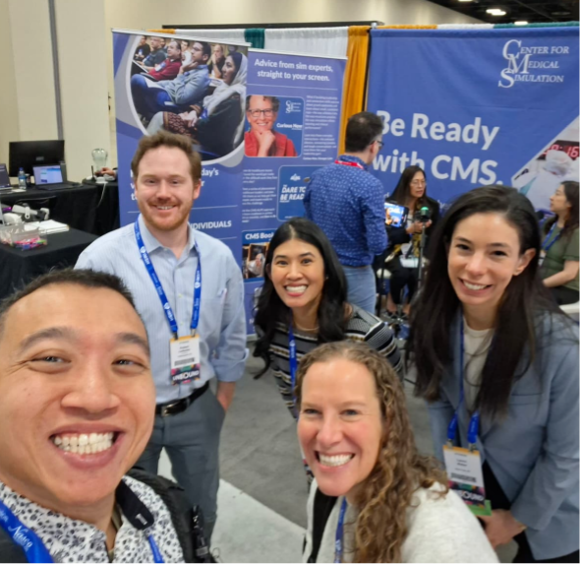
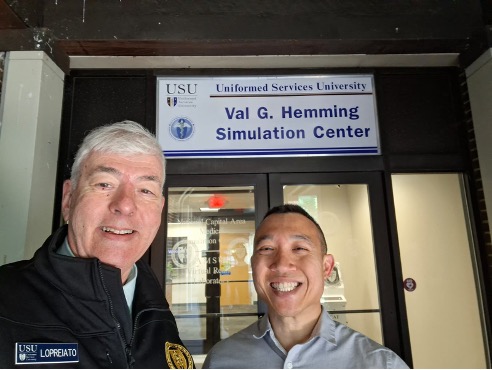
He also traveled to conferences, including the Society for Simulation in Healthcare’s International Meeting for Simulation in Healthcare (IMSH), and visited other Simulation Centers, expanding his professional network across the simulation world. CMS Fellowship Program Senior Director Roxane Gardner, reflecting on the many fellows who have passed through the program, singled out Dr. Chin as one of the fellows who most thoroughly integrated himself across every level of the organization — from the sim tech room to the faculty suite.
The impact of Dr. Chin’s fellowship project extended well beyond the walls of CMS. Participants in the course reported that the skills they acquired meaningfully shaped their practice in disaster medicine, and its influence was already being felt: the BIDMC Disaster Medicine Fellows were exercise developers and organizers of a large-scale, multi-agency simulation on 15 June 2026. They leveraged skills acquired through experiences, such as Excellence In Action: Field Trauma Treatment, oversaw the execution of drills in this complex exercise and successfully achieved their educational goals through the months-long process. Looking ahead, Dr. Chin and his collaborators are developing strategies to sustain and expand the course and engage leaders across Anesthesia and Disaster Medicine departments.
By the time Dr. Chin presented his fellowship work to the CMS community, it was clear that the year had been transformative in ways that went far beyond professional development. His family had embraced Boston life wholeheartedly, cheering at hockey tournaments, visiting the Grand Canyon and Acadia National Park, and experiencing the full, famously unpredictable range of New England weather. Dr. Chin spoke movingly of leaving with not just new skills and a strategic plan, but a second family — the colleagues, faculty, and collaborators who had made the quest possible. CMS honored him as someone who arrived as a fellow and departed as a force multiplier. As he prepares to bring everything he learned back to Singapore, Dr. Chin’s fellowship stands as a vivid example of what the CMS program is built to produce: a simulation leader deeply embedded in a global community of simulation leaders.